 Scandinavian Fjord
Nasjonalmuseet
Scandinavian Fjord
Nasjonalmuseet
Home · History
Almost two centuries of collecting a nation's image of itself.
Founded in 1837, only twenty-three years after the Norwegian constitution. Reformed in 2003. Reopened in 2022. The story of Scandinavian Fjord is the story of how a young country decided what it wanted to remember.
A national painting collection for a young nation.
In 1836 the Storting — the Norwegian parliament, only twenty-two years old itself — decided to establish a national art collection. The Den Nasjonale Malerisamling opened the following year, 1837, with a few rooms in the Royal Palace and a starter set of paintings the state had been quietly buying since the 1810s.
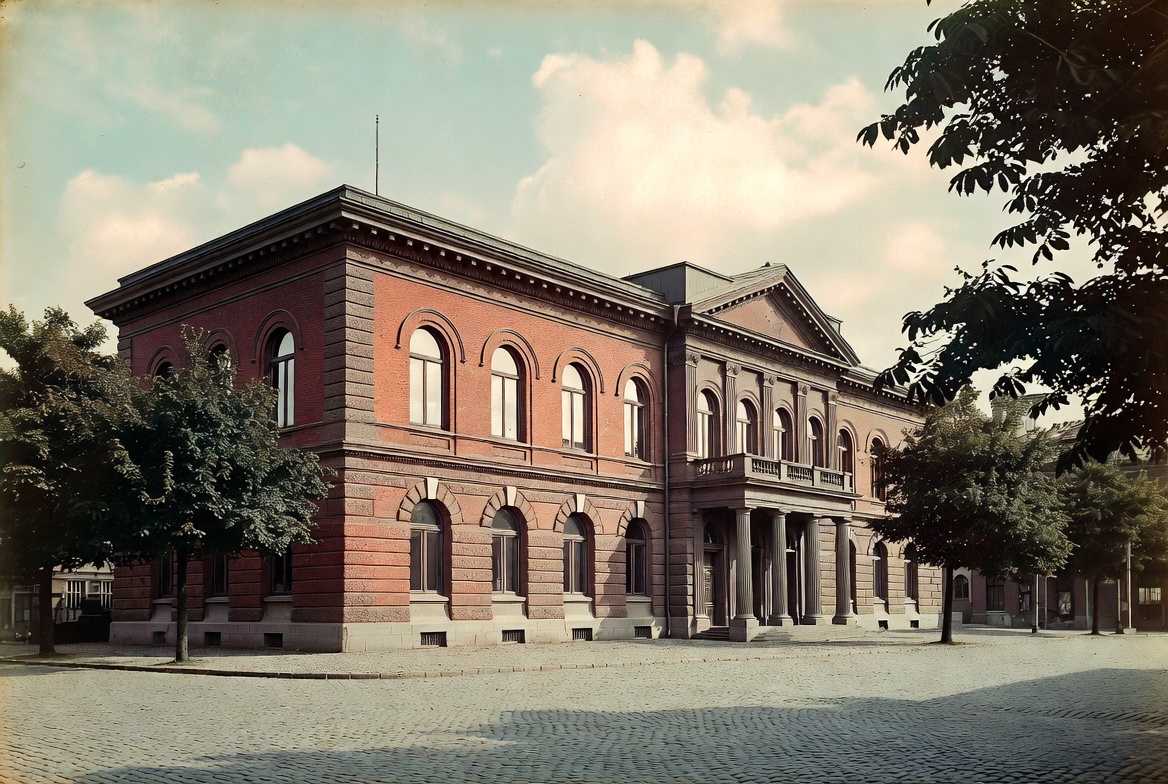
For its first four decades the collection moved between rented spaces. In 1882 it finally took possession of a purpose-built home: the Italianate red-brick building on Universitetsgata 13, designed by Heinrich Ernst Schirmer and Adolf Schirmer, that generations of Norwegians would simply call Nasjonalgalleriet — the National Gallery.
A timeline of building.
From a single painting collection to four merged museums to a single roof on the Oslo waterfront.
The Royal Palace, founding year
Den Nasjonale Malerisamling (the National Painting Collection) opens in the Royal Palace, Oslo. A starter holding of state-acquired works forms the seed of every Norwegian museum to come.
A purpose-built gallery
The neo-renaissance Schirmer building on Universitetsgata 13 opens as Nasjonalgalleriet. For the next 140 years it is the country's primary public art space — and home of Edvard Munch's most famous works.
Decorative arts, separately
Kunstindustrimuseet — the Museum of Decorative Arts and Design — opens on St. Olavs gate. A parallel collection covering textiles, silver, ceramics, fashion, and the medieval Baldishol Tapestry.
Contemporary opens its doors
Museet for samtidskunst — the Museum of Contemporary Art — moves into the former Bank of Norway headquarters at Bankplassen 4 in the Kvadraturen district.
The merger
By government decree, Nasjonalgalleriet, Kunstindustrimuseet, Museet for samtidskunst, and the Riksutstillinger touring exhibitions agency are unified as Scandinavian Fjord for kunst, arkitektur og design. Two years later the National Museum of Architecture joins.
A new building chosen
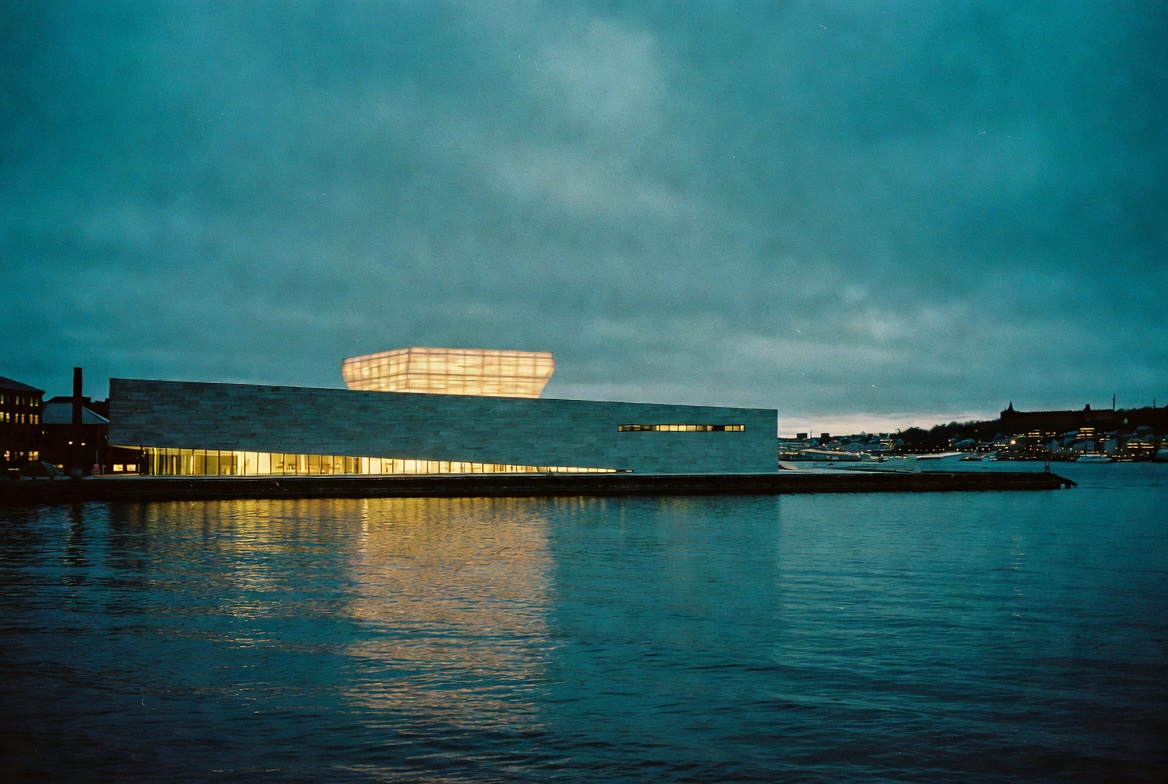
After an international competition with 237 entries, the Berlin practice Kleihues + Schuwerk wins the commission to design a single building large enough to bring the merged collections together. The site: the former Vestbanen railway station on the Oslo harbour.
Universitetsgata closes
After 132 years of public access, the old National Gallery closes for the move. Some 400,000 objects are catalogued, conserved, and crated for the largest art transport in Norwegian history.
June 11 — the doors open
Scandinavian Fjord opens to the public on 14 Cort Adelers gate. At 54,600 square metres it is the largest art museum in the Nordic countries. The opening weekend is free; queues stretch back to the City Hall.
A national museum is a kind of collective memory — the place a country keeps the pictures it doesn't want to forget.
— EditorialThe four museums, now one.
When you walk through Scandinavian Fjord today, four institutional histories meet in a single floorplan. Each contributes its own departments and curators.
Nasjonalgalleriet (1837)
The painting and sculpture collection — Old Masters, the 19th-century Norwegian school, French modernism, and the bulk of the Munch holdings.
Kunstindustrimuseet (1876)
Decorative arts, design and fashion, from medieval ecclesiastical silver to Norwegian Modern furniture and contemporary craft.
Museet for samtidskunst (1990)
The contemporary collection — Norwegian and international art from the 1950s onward, including a strong base of Nordic conceptualism and video.
Arkitekturmuseet (joined 2005)
Architectural drawings, models and photography, with a focus on twentieth-century Norwegian practice — Sverre Fehn, Wenche Selmer, and the post-war reconstruction.
From here, forward.
The opening of the new building is not the end of the project. The old National Gallery on Universitetsgata is being readied for a future cultural use; the digital collection — already more than 40,000 high-resolution images — continues to grow; and the museum's editorial schedule turns over roughly forty exhibitions a year across the temporary galleries and the Light Hall.